
Emily and I love our dahlias here at Cabbage Patch Flowers. In fact, they're pretty strong contenders for being our favourite flower! We love the incredible range of colours, shapes and sizes available. They're perfect for bringing a splash of colour to the farm towards the end of the growing season, just as many of our other blooms are coming to an end.
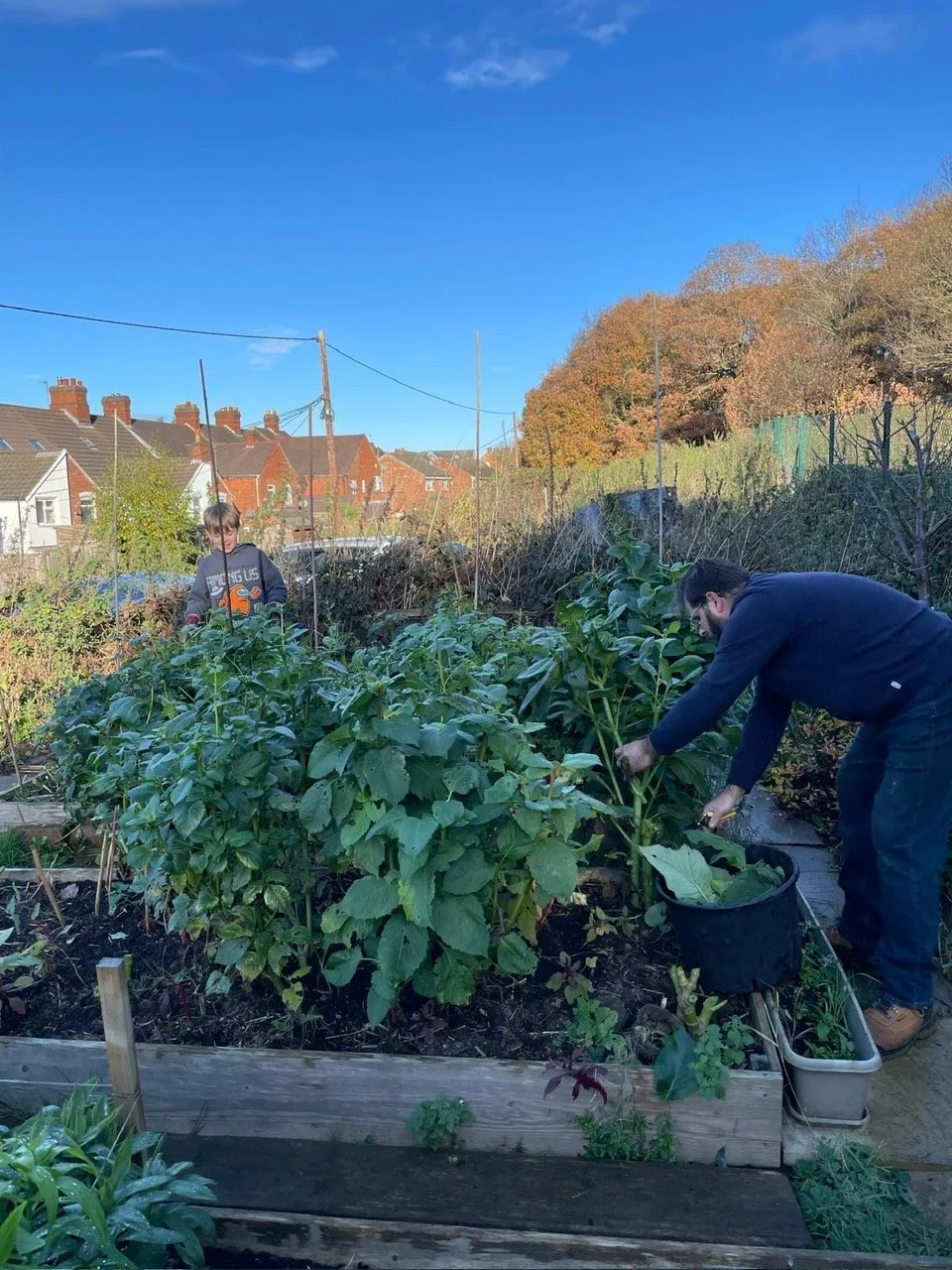
At the time of writing, our dahlias are still happily growing away in the ground, but we expect to be lifting them over the next two or three weeks. We're just waiting for those first frosts to arrive, which for us usually happens around November time.
Once the frost has blackened the foliage, it's time to start preparing our dahlias for winter.
For us, at the moment, that means digging them up.
Why Do We Lift Our Dahlias?
At Cabbage Patch Flowers, we lift our dahlias for a few reasons.
Firstly, it gives us a chance to have a good look at the tubers and potentially divide them in the spring, increasing the number of plants we have.
We can also pot them up early in the spring to give them a head start. Then, once the risk of frost has passed, we can plant out nice, well-established plants, hopefully giving us some earlier blooms.
Another benefit of starting our dahlias early is that, as the young shoots begin to appear, we can take cuttings to increase our stock even further and perhaps produce a few extra plants to sell.
But the main reason we lift our dahlias is to protect the tubers from our cold, wet British winters and give them the best possible chance of surviving until the following spring.
Can You Leave Your Tubers in the Soil?
If you have nice, free-draining soil that doesn't become waterlogged during the winter, dahlias can be left in the ground.
If you decide to do this, wait until the foliage has been blackened by the first frost, although you can do it a little earlier if the plants have started to slow down their growth.
Cut the foliage back to around 3–4 inches above the soil surface. I'd also recommend putting a cane in the ground to mark the position of the tuber and adding a label so you know which variety you've got.
Next, you'll need to add a nice, thick layer of mulch over the soil to help protect the tubers from the winter frosts.
I'd use some lovely homemade garden compost if you have it, or alternatively, some soil conditioner from the garden centre. Apply a layer around 2 inches thick, then finish with another 2–3 inches of straw for extra insulation.
The combination of soil and mulch will help protect the tubers from freezing temperatures, although the amount of protection will depend on how cold the winter gets, how long the cold weather lasts and how wet the soil becomes.
If we're forecast a particularly cold spell, you can always add some extra straw or a layer of horticultural fleece to give the tubers a little more protection.
Leaving dahlias in the ground can be a great way to save yourself some work, but there's always a risk of losing a few tubers, particularly during a very wet or cold winter.
How Do We Lift and Store Our Tubers?
We wait until the first frost has blackened the foliage before we start lifting our dahlias. We begin by cutting back the foliage to around 3–4 inches above the soil, just as we would if we were leaving the tubers in the ground.
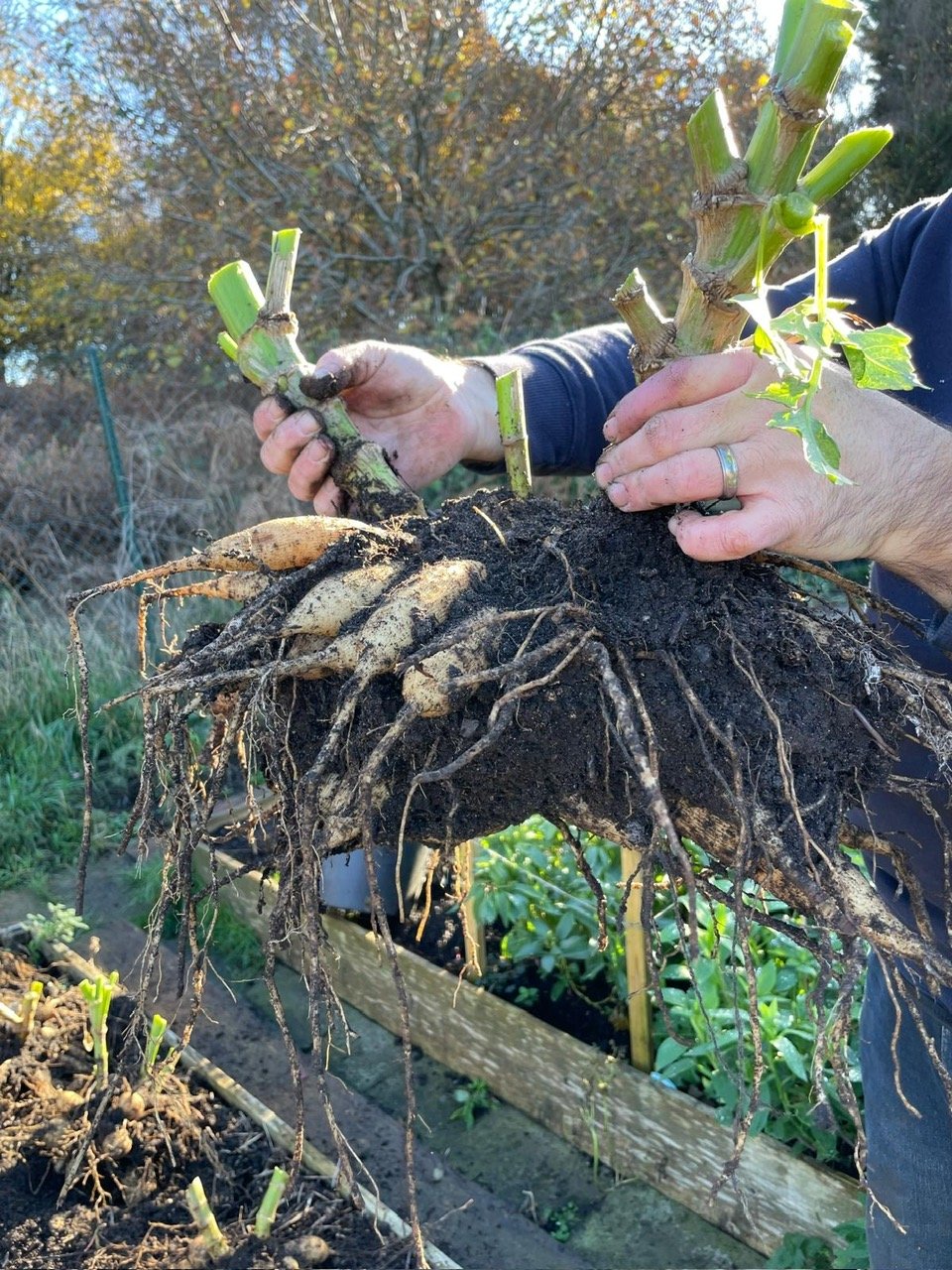
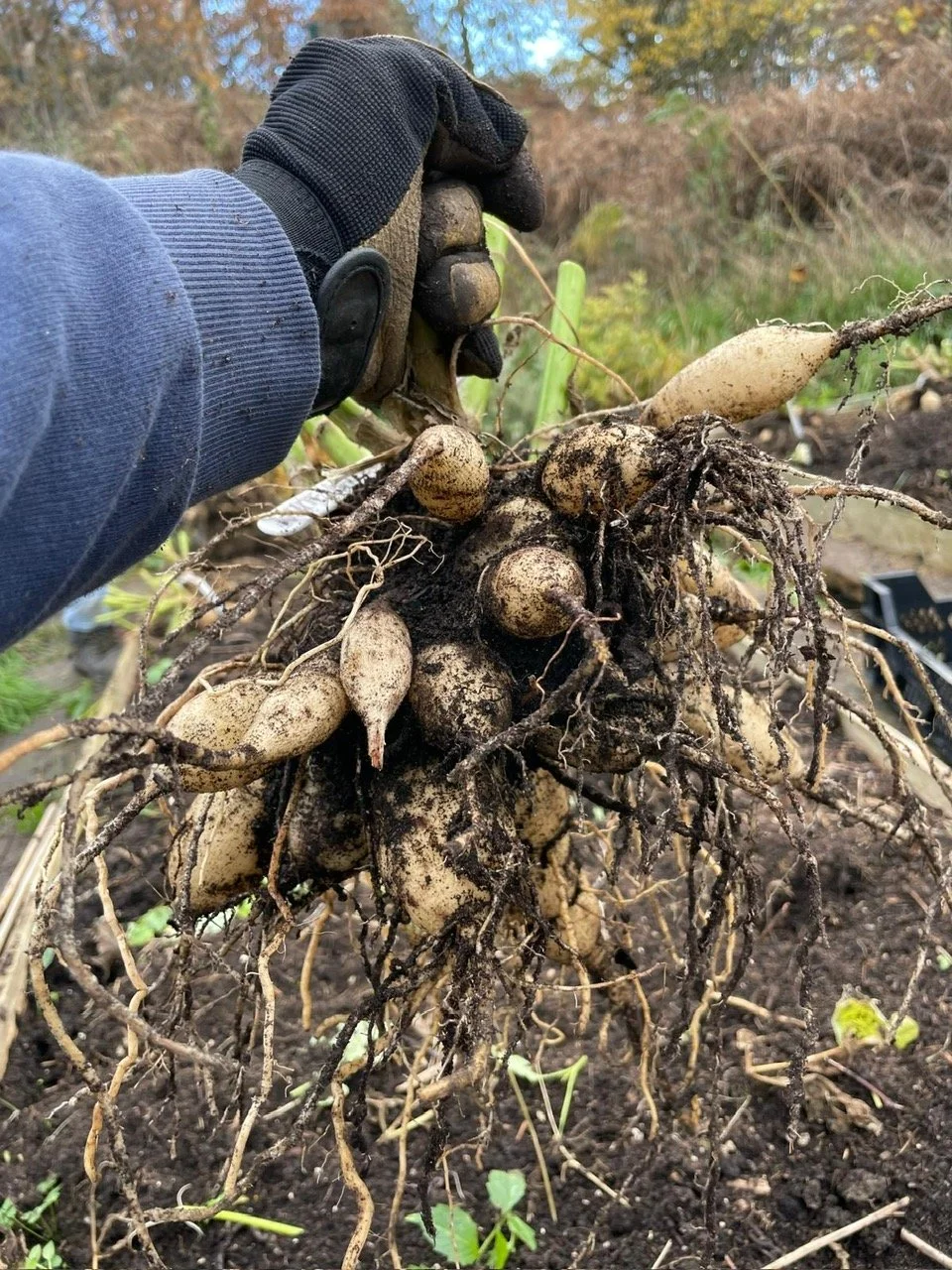
Then, using a garden fork, we carefully lift each plant, taking care not to damage the tubers. Once lifted, we try to shake off as much soil as possible.
I've seen people using a mallet to gently tap the old stems above the tubers to help knock off any stubborn soil. I'm not sure how well this works, but I might give it a try this year!
As we dig up the dahlias, we attach a label to each one so we can remember which variety is which when spring arrives.
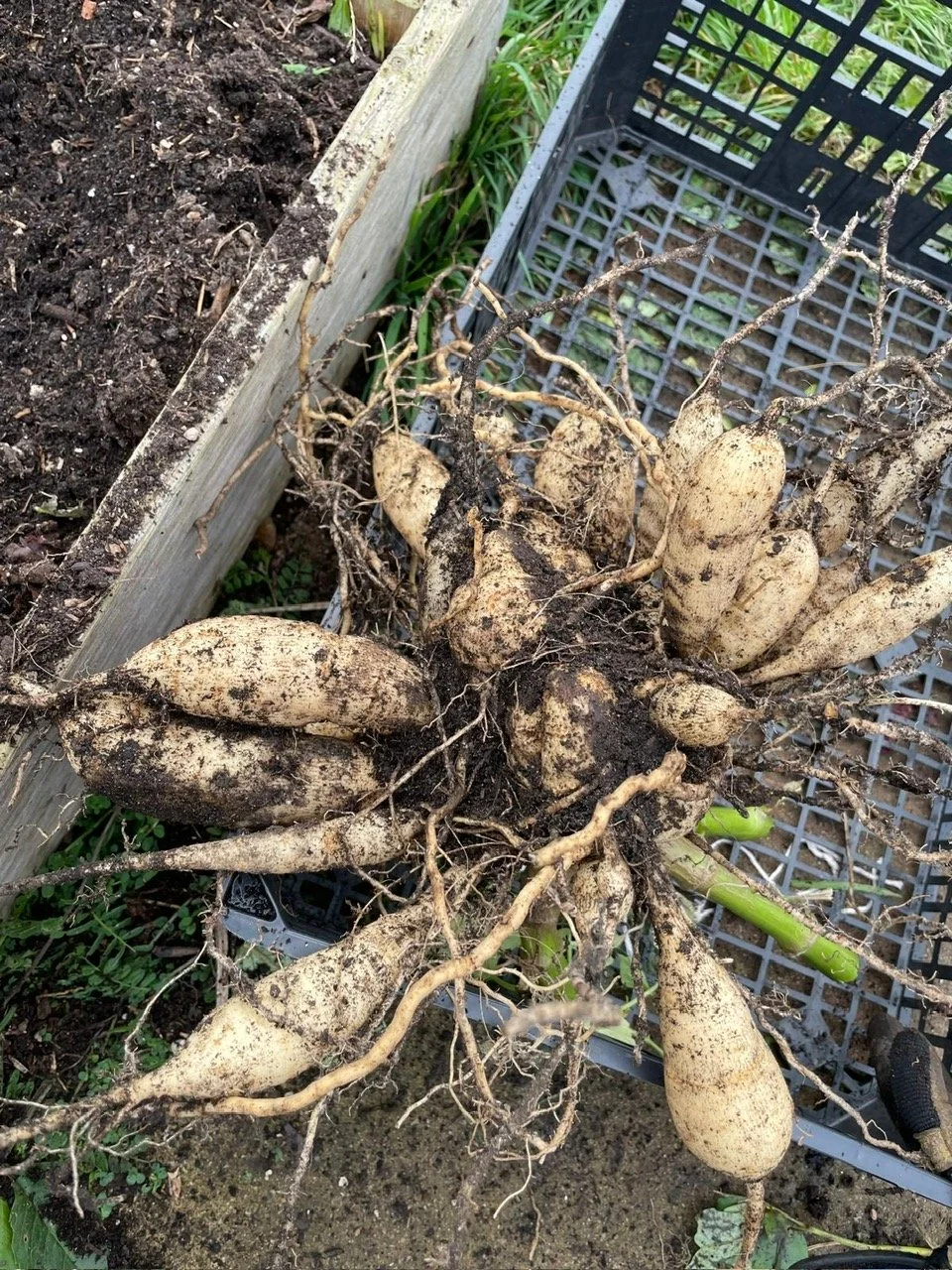
Next, we take the tubers into one of our greenhouses to dry. We place them upside down on the benches, leaving a little space between each one to allow the air to circulate. Some people prefer to wash all the soil off their tubers, but we prefer not to introduce any extra moisture if we don't have to.
After a couple of weeks, once the remaining soil has dried, we can usually knock most of it off quite easily. We then place the tubers into plastic crates with plenty of ventilation holes in the sides.
These crates are taken to a frost-free shed or garage, where they're stacked and stored ready for spring.
We do need to keep an eye on them throughout the winter, checking for any signs of mould, rot or excessive shrivelling. If the weather turns particularly cold, I may cover them with a layer or two of horticultural fleece for a little extra protection.
The main thing is to keep the tubers frost-free, with good air circulation around them, while making sure they don't dry out too much during storage.
Looking Ahead to Spring
We like to get a head start in the spring, so we usually begin unpacking our dahlias towards the end of February. We take them into our greenhouses, where we can keep them frost-free and ensure they have plenty of light, especially once the new shoots begin to appear.
We give each one a good inspection, looking for any rotten or mouldy tubers that need removing. Some will naturally divide into smaller plants, while others we can split ourselves. You just need to make sure that each division has at least one eye (growing point) on the crown, where the tubers join the old stem.
We then pot them up, using trays for the larger tubers and pots for the smaller ones. Some of ours are now a few seasons old and, even after dividing them, they're still quite substantial!
The ones we've selected to take cuttings from aren't completely covered with compost, as being able to see where the new shoots are growing from makes it much easier when it comes to taking the cuttings.
We currently have around 30 dahlia plants on the farm, but we're hoping to double this number next year through a combination of buying new plants and propagating from our existing stock.
Hopefully, that means even more beautiful dahlias to enjoy next season!
We'd Love to Hear From You!
We'd love to hear how you care for your dahlias over the winter. Do you lift and store them, or leave them in the ground?
And if you're new to growing dahlias and have any questions about getting them through the winter, please feel free to drop us a message. We'd love to hear from you!
